

Did you know that digital banking scams in the UAE increased by 73% in early 2025? This sharp rise in fraud makes reliable identity verification a foundational requirement, yet many organizations struggle with biometric system troubleshooting UAE when hardware fails under environmental stress. You've likely experienced the frustration of a locked entrance or a failed attendance log that compromises your administrative accuracy. These technical failures don't just halt productivity; they create security gaps and often lead to expensive emergency service calls for minor issues.
This guide provides a methodical framework for identifying and resolving common access control failures within the region's specific environmental and regulatory context. We'll help you manage the impact of high humidity on sensors while ensuring your data handling remains compliant with Federal Decree-Law No. 45 of 2021. We will systematically cover hardware diagnostics, software synchronization, and proactive maintenance strategies to ensure your system remains operational. By following these disciplined steps, you can ensure long-term reliability and minimize the need for external intervention, providing your organization with technical stability.
Key Takeaways
- Identify early indicators of hardware degradation, such as spikes in False Rejection Rates (FRR) and system latency, to prevent operational downtime.
- Master a methodical framework for biometric system troubleshooting UAE that prioritizes physical sensor maintenance and structured power cycles for controllers.
- Understand the specific impact of the UAE’s environmental stressors, including high ambient temperatures and fine sand infiltration, on optical sensor sensitivity.
- Establish clear technical thresholds for transitioning from internal troubleshooting to professional repair for persistent hardware failures or multi-point outages.
- Recognize the value of shifting from reactive repairs to proactive Annual Maintenance Contracts (AMCs) to ensure long-term system reliability and SIRA compliance.
Common Signs of Biometric System Failure in UAE Enterprises
Identifying failure early prevents minor glitches from escalating into total system outages. In UAE enterprises, performance issues often manifest as subtle inconsistencies before the hardware fails entirely. Effective biometric system troubleshooting UAE begins with recognizing these specific indicators through a disciplined monitoring process.
Identifying False Rejection vs. False Acceptance
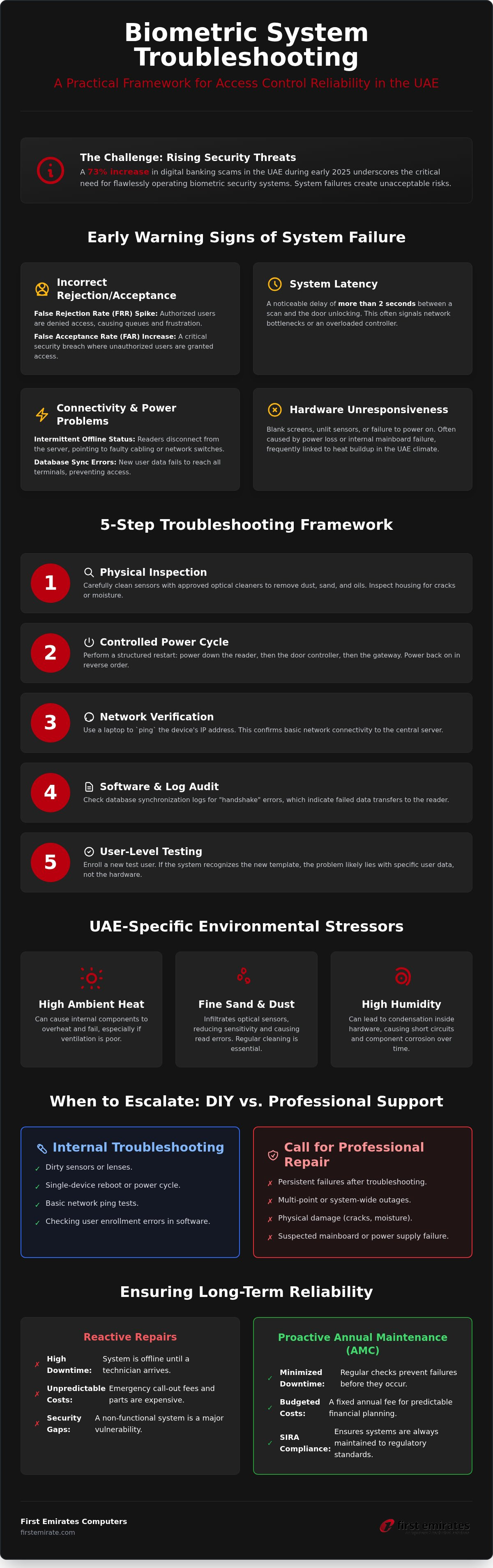
The False Rejection Rate (FRR) occurs when the system denies access to an authorized user. In busy Abu Dhabi offices, high FRR leads to employee frustration, entry queues, and lost productivity. Conversely, a high False Acceptance Rate (FAR) is a critical security vulnerability where unauthorized individuals are granted entry. Modern biometric systems require precise calibration to balance these metrics. Administrators should maintain a digital log of failed attempts to identify if specific terminals or user groups are disproportionately affected. If a single device shows a sudden spike in rejections, it's a clear sign that the sensor requires cleaning or recalibration.
System latency is a reliable indicator of underlying strain. If there's a noticeable delay of more than two seconds between a successful scan and the audible click of the door lock release, the system is struggling. This lag often signals a communication bottleneck between the terminal and the door controller. It might be caused by an overloaded local network or a controller processing too many concurrent requests. Database synchronization errors are equally disruptive. When a new employee is enrolled at a central office but cannot access branch terminals, the background data transfer between the local reader and the central server has failed. This usually points to a software configuration error or a break in the network chain.
Total hardware unresponsiveness represents a critical failure point. Signs include blank LED screens on facial recognition terminals or fingerprint sensors that fail to illuminate when a finger is presented. These symptoms usually suggest a complete loss of power or a critical failure of the internal mainboard. In the UAE's climate, these failures are frequently linked to internal heat buildup within the housing or improper ventilation in the installation area.
Connectivity and Power Supply Symptoms
Maintaining stable performance requires a robust infrastructure. Intermittent "offline" statuses in your management software often point to issues within the structured cabling or network switches. Because these are Extra Low Voltage (ELV) systems, even minor fluctuations in power delivery can cause readers to reboot or lose their local cache. Ensuring signal integrity through high-quality cabling is essential for biometric system troubleshooting UAE, as it eliminates the physical layer as a source of error. Regularly checking the status of power supply units and backup batteries ensures that the system remains functional during minor electrical variances.
A Step-by-Step Biometric System Troubleshooting Framework
A disciplined approach to maintenance ensures that identity verification remains secure and efficient. Methodical biometric system troubleshooting UAE reduces operational downtime by isolating variables one at a time. Following a structured sequence prevents technician error and ensures that the root cause of a failure is addressed rather than just the symptom.
- Step 1: Physical Inspection — Begin by cleaning sensors with approved optical cleaners to remove sand and oils. Inspect the housing for visible cracks or signs of moisture ingress.
- Step 2: Power Cycle — Perform a controlled restart. Power down the biometric reader first, followed by the door controller, and then the communication gateway. Reverse this order when powering back on.
- Step 3: Network Verification — Use a laptop to ping the device's IP address. This confirms if the terminal is communicating with the central management server.
- Step 4: Software Audit — Check for database synchronization logs. Look for "handshake" errors that indicate the server isn't pushing updated user templates to the local reader.
- Step 5: User-Level Testing — Re-enroll a known test subject. If the system recognizes the new template but fails on existing ones, the issue is likely database corruption rather than hardware failure.
Hardware Diagnostics: Sensors and Controllers
Differentiating between sensor types is vital for accurate diagnostics. Optical fingerprint sensors are prone to surface scratches from fine desert sand, while capacitive sensors are more sensitive to electrical interference. Technicians must check the integrity of the structured cabling services UAE at each termination point. Loose connections in the ELV wiring often cause intermittent power drops that mimic hardware failure. Always test the door strike and maglock independently using a manual override to ensure the mechanical locking components aren't the source of the "failed access" report.
Software and Firmware Optimization
Maintaining long-term reliability requires consistent software oversight. In multi-site installations across the Emirates, database conflicts often arise when local terminal clocks aren't synchronized with the main server. Outdated firmware poses a significant risk in modern access control system company environments, as it can lead to compatibility issues with newer operating systems. Before performing any system resets or firmware flashes, always back up the biometric templates to a secure, off-site location to prevent the need for manual employee re-enrollment. For organizations seeking a more stable approach, an Annual Maintenance Contract provides the structured oversight needed to prevent these glitches entirely.
Environmental Impacts on Biometric Performance in the UAE
The UAE presents a unique set of environmental stressors that directly influence the reliability of identity verification hardware. While high-quality components are designed for durability, the combination of extreme heat, fine particulate matter, and coastal humidity necessitates a specialized approach to biometric system troubleshooting UAE. Failure to account for these local conditions often leads to premature hardware fatigue and inconsistent user recognition.
- High Ambient Temperatures: Sustained exposure to heat exceeding 45°C can cause internal circuitry to expand, leading to micro-fractures in solder joints. This heat also degrades the sensitivity of optical sensors, resulting in higher false rejection rates.
- Fine Dust and Sand Infiltration: Desert sand is highly abrasive. When these particles accumulate on optical glass, they create micro-scratches that diffuse sensor light, making it difficult for the system to capture a clear biometric template.
- Humidity and Condensation: In coastal areas like Dubai and Abu Dhabi, rapid temperature shifts between air-conditioned interiors and humid exteriors cause internal condensation. This moisture can lead to short circuits in Extra Low Voltage (ELV) components.
- Static Electricity: In heavily air-conditioned environments where the air is exceptionally dry, static buildup can interfere with capacitive touch interfaces, causing the screen to become unresponsive or register "ghost" touches.
Mitigating Heat-Related Hardware Fatigue
Protecting outdoor terminals requires the use of specialized IP-rated enclosures, typically IP65 or higher, to provide a barrier against both heat and moisture. Beyond the terminal itself, access controllers housed in server rooms must benefit from consistent climate control and proper rack ventilation to ensure stable processing. Thermal throttling in biometric processors is a protective mechanism that automatically reduces the device's clock speed to lower heat generation when internal temperatures exceed safe operating thresholds, often resulting in noticeable system lag. To prevent this, ensure that all enclosures have adequate airflow and are positioned away from direct sunlight whenever possible.
Dust Management and Sensor Maintenance
Maintaining system integrity in industrial zones like Musaffah requires a more rigorous cleaning schedule than standard office environments. We recommend a weekly physical inspection and cleaning using non-abrasive, industrial-grade isopropyl alcohol and lint-free microfibers. Using protective shields for high-traffic outdoor fingerprint scanners can significantly reduce the volume of sand that reaches the sensor surface. This proactive maintenance is a cornerstone of effective biometric system troubleshooting UAE, as it prevents the physical degradation that eventually necessitates expensive hardware replacement. For organizations operating in high-dust environments, integrating these checks into a formal maintenance protocol is essential for long-term operational stability.
When to Transition from DIY Fixes to Professional Repair
While basic biometric system troubleshooting UAE can resolve surface-level glitches, certain technical indicators demand professional intervention to protect your infrastructure. If a device continues to fail after multiple re-enrollment attempts, the issue likely resides in the internal processing unit or the biometric sensor's physical substrate. Widespread outages that affect multiple access points simultaneously are rarely isolated hardware issues. They usually signal a deeper failure in the network backbone or the central controller. Attempting to fix these complex errors without specialized diagnostic tools can lead to irreversible damage.
Immediate professional attention is required if you detect any signs of electrical shorting. Burning smells, scorched terminal blocks, or localized heat on the controller casing are precursors to total system failure and potential fire hazards. These symptoms often occur when the system is integrated into complex ELV project contractors Abu Dhabi infrastructure without adequate surge protection or proper grounding. In these scenarios, the risk of a cascading failure across your security network is high, making expert assessment a priority for business continuity.
Maintaining Regulatory Compliance
In the UAE, security infrastructure is governed by strict mandates from SIRA (Security Industry Regulatory Agency) and MCC (Monitoring and Control Centre). Performing uncertified repairs on biometric hardware can void your compliance status, leading to significant fines during annual audits. Professional IT maintenance companies Abu Dhabi provide certified technicians who understand the specific requirements for biometric data storage and transmission. They ensure that all repairs align with Federal Decree-Law No. 45 of 2021 regarding sensitive personal data, maintaining the legal integrity of your security system while you focus on core operations.
The Risk of Unauthorized System Tampering
Amateur troubleshooting attempts often trigger built-in anti-tamper mechanisms. Modern biometric readers are equipped with optical and physical sensors that detect unauthorized housing removal. Once triggered, these alarms can lock down the entire site's access control or, in some high-security configurations, wipe encrypted biometric templates to prevent data theft. Losing these templates means every employee must be manually re-enrolled, a process that causes massive operational disruption. Establishing a standard operating procedure for external vendor handovers ensures that system logs are maintained and encryption keys remain secure. If your internal team cannot resolve an issue through basic power cycles, it is safer to request a professional system audit to prevent accidental data loss.
Ensuring Long-Term Reliability with Expert Maintenance Contracts
Transitioning from reactive biometric system troubleshooting UAE to a proactive maintenance model is the most effective way to ensure business continuity. While internal teams can handle basic restarts, a professional Annual Maintenance Contract (AMC) addresses the underlying technical debt that leads to system failure. By shifting the focus toward prevention, organizations reduce the frequency of operational disruptions and eliminate the unpredictability of emergency repair costs. A structured maintenance plan provides a steady, functional approach to security management, ensuring that every component of the access control network remains in a state of technical readiness.
- Quarterly Health Checks: A professional biometric audit includes deep-cleaning of optical sensors, recalibration of facial recognition algorithms, and a thorough review of system logs for latent errors.
- Database Optimization: Technicians prune redundant templates and synchronize local caches with the central server to prevent the synchronization errors discussed in previous sections.
- Priority Response: Critical security infrastructure failures receive immediate attention, with defined service level agreements (SLAs) ensuring that downtime is measured in minutes rather than days.
- Firmware Management: Regular updates are applied in a controlled environment, preventing the software conflicts that often arise from outdated security protocols.
Customized AMC Solutions for UAE Businesses
Effective maintenance is not a one-size-fits-all service. Small offices require different support structures compared to the complex networks managed by large-scale structured cabling companies in Abu Dhabi. Comprehensive service contracts often include the provision of spare parts and temporary replacement units, ensuring that a hardware failure doesn't leave a high-traffic entrance unsecured. First Emirates Computers ensures 99.9% uptime for biometric systems by combining real-time monitoring with scheduled physical inspections. This methodical oversight provides business owners with the stability needed to manage large workforces without the constant threat of technical glitches.
The First Emirates Advantage in Abu Dhabi
Our methodical approach to security system integration and maintenance is rooted in a deep understanding of the local landscape. Since our establishment in 2011, we've focused on delivering integrated solutions that meet the rigorous standards of the UAE security market. By leveraging over a decade of local expertise, we provide a level of comprehensive oversight that ad-hoc repair services cannot match. We prioritize the long-term reliability of your assets through disciplined support and technical proficiency. Contact our team for a comprehensive system evaluation today to move beyond basic biometric system troubleshooting UAE and toward a more resilient security posture with our IT AMC services Abu Dhabi.
Optimizing Your Access Control for Long-Term Performance
Maintaining a secure facility requires more than just high-quality hardware; it demands a disciplined approach to maintenance. By understanding how the UAE's environmental stressors affect sensor sensitivity and following a structured framework for biometric system troubleshooting UAE, you can prevent minor glitches from becoming major security risks. Transitioning from reactive repairs to a proactive maintenance model ensures your organization remains compliant with current SIRA and MCC regulations while protecting sensitive employee data. This methodical oversight is essential for any business operating within the region's complex technical landscape.
First Emirates Computers has been a dependable partner in Abu Dhabi security infrastructure since 2011. We provide SIRA-aligned technical expertise and methodical 24/7 system support to ensure your installations remain operational under any conditions. Our team is committed to providing the technical readiness and stability your business requires. Secure your business with a professional Biometric Maintenance Contract today and gain the peace of mind that comes from professional oversight. We're ready to help you maintain a resilient and reliable access control environment.
Frequently Asked Questions
Why is my fingerprint scanner not recognizing users in the afternoon?
High ambient light levels and direct afternoon sunlight often interfere with optical sensors by washing out the contrast of the fingerprint image. Additionally, thermal expansion in the device housing during peak heat hours can cause slight internal misalignments. If your device is mounted near a window or outdoors, consider installing a protective glare shield or transitioning to a multi-modal system that includes facial recognition to maintain consistent access performance during high-temperature periods.
How often should I clean my biometric sensor in the UAE?
In the UAE’s dusty environment, optical sensors should be cleaned at least once per week for standard office settings. For high-traffic industrial zones like Musaffah, daily cleaning is recommended to prevent abrasive sand particles from scratching the glass surface. Use a lint-free microfiber cloth and approved non-abrasive optical cleaners. Regular cleaning is a fundamental part of biometric system troubleshooting UAE as it prevents the buildup of oils and particulates that cause false rejections.
What should I do if the biometric system software shows a "Database Connection Failed" error?
A "Database Connection Failed" error usually indicates a break in communication between the terminal and the central management server. First, verify the network connectivity by attempting to ping the device's IP address from a terminal on the same subnet. If the hardware is reachable, check if the database service on the server is active. These errors are frequently caused by firewall changes or IP conflicts within the structured cabling network that require a methodical reset.
Can heat damage my outdoor biometric access control terminal?
Sustained exposure to temperatures exceeding 45°C can lead to micro-fractures in internal circuitry and degrade the sensitivity of biometric sensors. Outdoor terminals must be housed in IP65-rated or higher enclosures to provide a barrier against heat and moisture. Without proper ventilation or shading, internal components may experience thermal throttling, leading to significant system lag or permanent hardware failure. Selecting industrial-grade hardware designed for the Arabian Peninsula's climate is essential for long-term reliability.
Is it better to repair or replace an old biometric attendance system?
Choosing between repair and replacement depends on the system’s age and its ability to meet current SIRA standards. If a system is over five years old, the cost of specialized spare parts often exceeds the value of a modern facial recognition terminal with integrated AI. Newer systems offer better biometric system troubleshooting UAE capabilities through cloud-based diagnostics. We recommend a professional evaluation to determine if your existing infrastructure can support the latest security protocols effectively.
Does First Emirates Computers provide emergency troubleshooting in Abu Dhabi?
Yes, First Emirates Computers provides comprehensive troubleshooting and technical support across Abu Dhabi. Since our establishment in 2011, we've specialized in maintaining critical security infrastructure for corporate and industrial clients. Our team of experts is equipped to handle complex ELV project failures and biometric system outages. We prioritize technical readiness and stability, ensuring that our clients receive a steady, professional response to resolve any urgent access control or surveillance issues.
What are the benefits of an Annual Maintenance Contract for biometrics?
An Annual Maintenance Contract (AMC) shifts your security management from reactive troubleshooting to a proactive, methodical model. Benefits include scheduled quarterly health checks, priority response times for critical failures, and regular firmware updates to prevent security vulnerabilities. By choosing an AMC, businesses ensure 99.9% system uptime and avoid the high costs associated with ad-hoc emergency repairs. This structured approach provides long-term peace of mind through consistent technical oversight and integrated support.
How do I ensure my biometric system repair stays SIRA compliant?
To maintain SIRA compliance, all repairs must be performed by certified technicians who understand the specific requirements for biometric data storage and transmission. Ensure that your service provider follows Federal Decree-Law No. 45 of 2021 regarding sensitive personal data protection. First Emirates Computers specializes in SIRA-compliant installations and maintenance, ensuring that every system modification is logged and matches the regulatory standards required for security infrastructure within the United Arab Emirates.


