
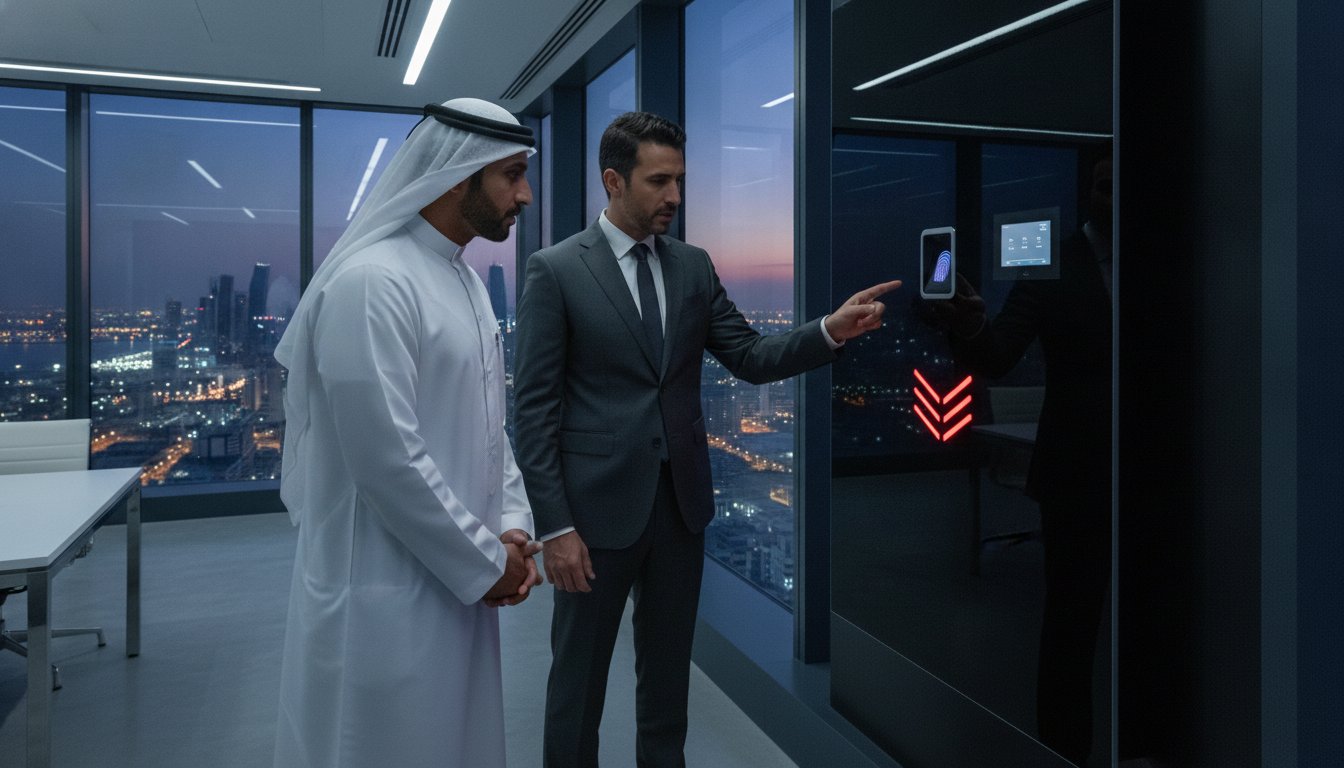
Failing to secure ADMCC approval for your monitoring systems in Abu Dhabi can result in fines up to AED 200,000 or even imprisonment. This strict regulatory environment means that choosing an access control system company is no longer just a procurement task; it's a critical compliance decision. Most business leaders agree that while security is a priority, the technical complexity of integrating biometrics with existing IT infrastructure often leads to frustrating gaps in performance and support.
This guide helps you evaluate and choose a partner that delivers a secure, scalable environment while meeting the latest 2026 UAE standards. You'll learn how to navigate the requirements of the Personal Data Protection Law (PDPL) and the advantages of biometric integration. We'll also explain why a methodical approach to Annual Maintenance Contracts (AMCs) ensures your system remains reliable and fully integrated with your CCTV and cabling infrastructure for the long term.
Key Takeaways
- Understand the transition from basic hardware to integrated IP-based systems where the provider acts as a comprehensive systems integrator.
- Compare the technical reliability and operational efficiency of modern biometric technologies, including facial recognition and contactless entry.
- Apply a methodical framework for evaluating an access control system company based on technical proficiency and their ability to manage complex ELV projects.
- Identify the critical regulatory standards set by ADMCC and SIRA to ensure your facility remains compliant with UAE security and data protection laws.
- Learn the importance of establishing long-term stability through Annual Maintenance Contracts (AMCs) that cover both security hardware and IT infrastructure.
Understanding the Role of a Professional Access Control System Company
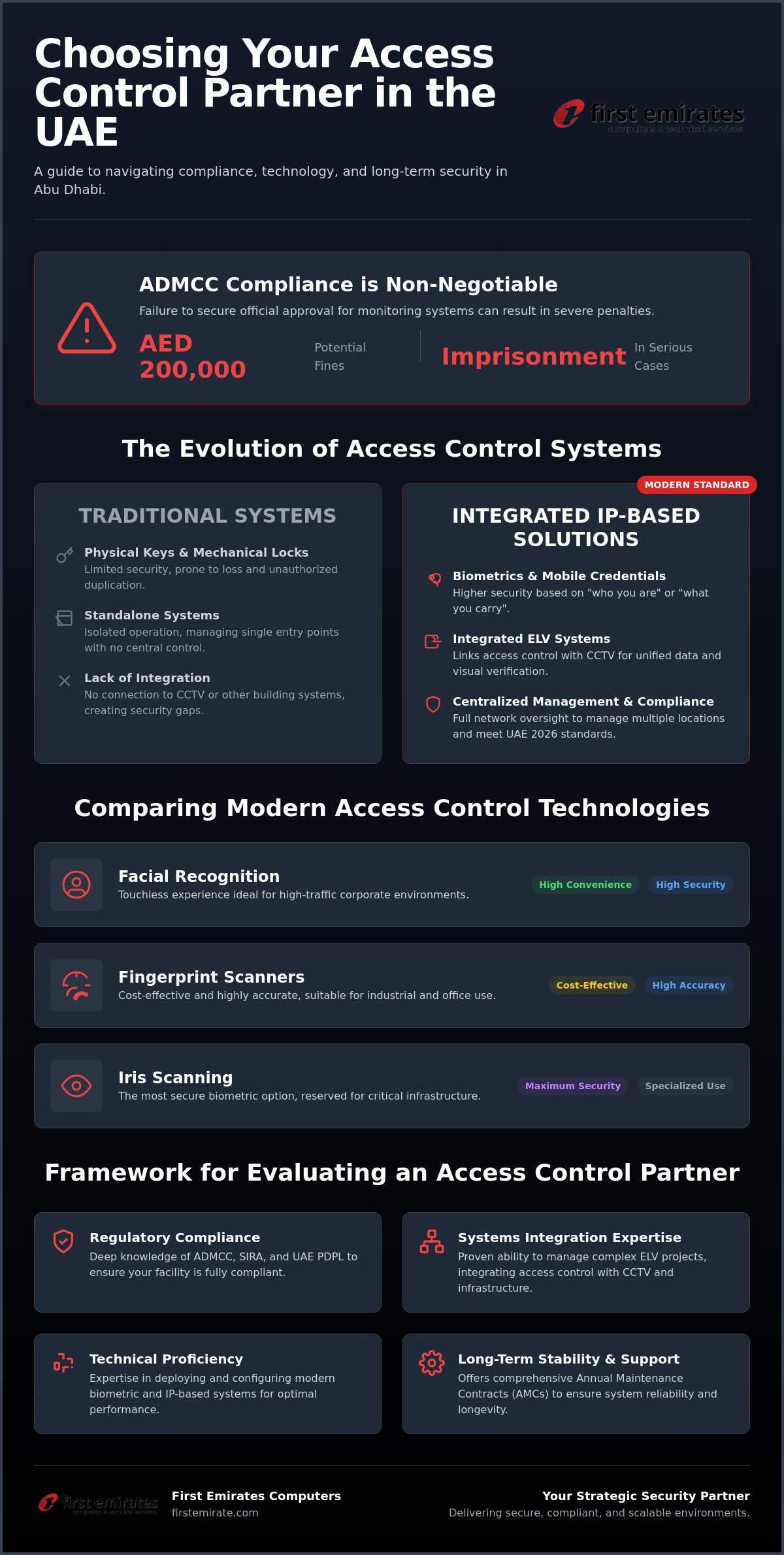
A professional access control system company operates as a systems integrator, taking full responsibility for the design, deployment, and ongoing maintenance of security infrastructure. They're not just equipment vendors; they're technical partners who translate complex security requirements into functional hardware and software environments. In previous decades, security relied on physical keys and mechanical locks. Today, the industry has transitioned toward sophisticated IP-based systems that utilize biometric data and real-time network communication. Understanding these Access Control Fundamentals is essential for any business leader looking to secure a facility in 2026.
Modern providers prioritize a capability-first approach. This means they focus on how different technologies work together to solve specific operational challenges, such as tracking employee attendance or managing visitor flow in high-traffic industrial zones. It's vital to distinguish between hardware manufacturers and local technical service providers. While a manufacturer builds the readers and controllers, the local company ensures those components function within your specific environment and comply with local regulations. This hands-on oversight is what guarantees the stability of the entire security network.
Standalone vs. Integrated Security Solutions
Standalone systems operate in isolation, often managing a single door or a small office without connecting to a broader network. While these are cost-effective for minor needs, they lack the scalability required for modern enterprises. Integrated security environments link access control with other ELV (Extra Low Voltage) systems. For instance, connecting your entry points with CCTV installation Abu Dhabi allows for visual verification of every access event. This integration creates a unified data stream that makes it easier to investigate security breaches or operational bottlenecks. A comprehensive security overhaul is usually necessary when a business expands to multiple locations or requires centralized management.
The Security Ecosystem in the UAE
The UAE's security landscape is highly regulated and technologically advanced. Commercial and industrial sectors must navigate specific requirements set by authorities like ADMCC in Abu Dhabi and SIRA in Dubai. Choosing a partner with deep roots in the local infrastructure is a strategic necessity. A provider that understands the nuances of local cabling standards and data privacy laws ensures that your system is not only functional but also legally compliant. This level of readiness is what separates a basic installer from a long-term technical partner who can provide peace of mind through technical competence.
Comparative Analysis of Modern Access Control Technologies
The evolution of security hardware has moved rapidly beyond basic proximity cards. High-definition biometric data and contactless entry are now the standard benchmarks for any professional access control system company. This shift is driven by the need for higher security thresholds and faster throughput in busy environments. While traditional methods focused on "what you have" (a key or card), modern systems prioritize "who you are" (biometric traits) or "what you carry" (a smartphone credential). Selecting the right technology requires a methodical evaluation of your facility's traffic patterns and security risks.
Reliability varies significantly across biometric modalities. Fingerprint scanners offer high accuracy and are cost-effective for industrial workshops. However, facial recognition has gained dominance in corporate lobbies because it provides a touchless experience. Iris scanning remains the most secure option, typically reserved for critical infrastructure like financial vaults or data centers. For high-rise commercial buildings, the integration of control panels with elevator management is essential. This ensures that users can only access floors authorized by their credentials, a feature that is now a standard requirement for complex ELV projects in Abu Dhabi.
Biometric Attendance and Access Systems
Biometric systems serve a dual purpose by securing entry points and automating workplace efficiency. These systems eliminate "buddy punching" in time-tracking by ensuring the physical presence of the employee. Technical precision during face recognition setup or fingerprint door lock installation is vital; poor configuration leads to high false-rejection rates that frustrate staff. From a compliance perspective, the UAE Personal Data Protection Law (PDPL) mandates strict standards for how biometric templates are stored. Most modern installations now utilize encrypted databases hosted in local data centers to remain compliant with federal regulations.
RFID and Card-Based Infrastructure
Traditional RFID and card-based systems still hold value for large-scale residential projects or temporary visitor management. They are often easier to scale across thousands of users without the high initial cost of biometric hardware. These systems require robust centralized management software to track card issuance and revocations in real time. For industrial sites with high turnover, RFID remains a practical choice due to its simplicity and ease of replacement. If you are planning a facility upgrade, exploring biometric access control solutions can help determine if a hybrid approach or a full biometric transition is more suitable for your long-term goals.
Criteria for Evaluating Access Control Companies in the UAE
Selecting a professional access control system company involves a commitment to a long-term technical partnership rather than a one-time hardware purchase. A methodical vetting process is essential to ensure your chosen provider can handle the complexities of the Abu Dhabi market. Evaluating a company's technical proficiency requires looking beyond marketing claims and focusing on their history of stability and their command of industry-standard terminology. In a corporate B2B environment, you need a partner who demonstrates a quiet confidence rooted in technical readiness and a deep understanding of local infrastructure.
Local ownership and a sustained presence in the region are significant indicators of reliability. A company that has operated as a locally owned LLC in Abu Dhabi since 2011, for example, offers a level of accountability and local specialist knowledge that newer or non-local entities may lack. This stability is crucial when managing integrated security projects that require ongoing support and compliance with evolving UAE regulations. Your evaluation should also consider the breadth of their service model, including their ability to manage IT hardware sales and integrated security assets alongside basic installation tasks.
Technical Expertise and ELV Integration
A capable access control partner must possess a comprehensive understanding of how security hardware interacts with the broader IT environment. This is why it's vital to assess whether a provider can deliver professional structured cabling services UAE. Without a robust cabling foundation, even the most advanced biometric readers will suffer from connectivity issues or data latency. A company's ability to execute complex Extra Low Voltage (ELV) projects indicates they can manage the sophisticated "capability-first" architecture required for modern enterprise security. This integrated approach ensures that your access control, CCTV, and IT infrastructure function as a single, cohesive ecosystem.
The Critical Role of Annual Maintenance Contracts (AMCs)
System reliability depends on proactive oversight rather than reactive repairs. An Annual Maintenance Contract (AMC) is the most effective way to protect your security investment and ensure total readiness. When evaluating an AMC, prioritize providers who offer structured hardware checks, regular firmware updates, and guaranteed response times. These methodical processes prevent minor technical glitches from escalating into significant security vulnerabilities. Regular maintenance reduces long-term downtime and ensures that your biometric templates and system logs remain secure and accessible. A professional access control system company will view an AMC as a core component of their service delivery, providing the steady hand needed to navigate a complex technical landscape.
Compliance and Implementation: Navigating Abu Dhabi Regulations
Operating a business in Abu Dhabi requires strict adherence to the standards established by the Abu Dhabi Monitoring and Control Centre (ADMCC). These regulations are not optional; they're mandatory for public and private facilities, including banks, hotels, and hospitals. Choosing a certified access control system company is a legal necessity to ensure your facility remains compliant with local security mandates. Failure to obtain the required approvals for monitoring and control devices can result in fines ranging from AED 50,000 to AED 200,000. This regulatory framework ensures that all security installations provide a high level of reliability and data integrity across the capital.
Working with approved contractors is the only way to secure the necessary commercial and industrial permits for your security infrastructure. These professionals understand the specific hardware certifications and installation practices required by ADMCC and SIRA. They ensure that every component, from biometric readers to the underlying structured cabling, meets standardized performance benchmarks. This methodical approach to compliance protects your organization from the legal and operational risks associated with unapproved or non-compliant security vendors.
Regulatory Standards for Security Installations
Local authorities govern the deployment of access control and surveillance to maintain public safety and data privacy. In Dubai, the Security Industry Regulatory Agency (SIRA) sets specific requirements for video and access data management, while ADMCC oversees the Abu Dhabi landscape. A professional company ensures compliance by utilizing certified hardware that supports the necessary encryption and storage standards. This is particularly important under the UAE Personal Data Protection Law (PDPL), which mandates that personal data, including biometric templates, be handled with extreme care and stored in compliant data centers. Professional integrators provide the technical readiness needed to meet these complex legal obligations.
The Installation Lifecycle
A successful implementation follows a structured lifecycle designed to eliminate technical gaps. It begins with a comprehensive pre-installation site survey to assess infrastructure readiness and identify potential cabling challenges. Project management plays a critical role during the deployment phase, ensuring that hardware is installed according to the approved design and within the specified timeline. This discipline prevents delays that could impact your facility's operational permit.
The final phase involves rigorous post-installation testing and system commissioning. This ensures that every entry point and biometric reader functions as intended within the integrated ELV environment. A thorough handover includes staff training on the management software, ensuring your team is fully prepared to operate the system effectively. To ensure your facility meets all current legal requirements, you can contact our technical team for a compliance assessment and start your project with a reliable partner.
Strategic Security Partnership with First Emirates Computers
Establishing a secure environment requires more than just high-end hardware; it demands a partnership with a seasoned, authoritative expert. Since its establishment in 2011, First Emirates Computers has served as a dependable, long-term partner for businesses across the UAE. As a locally owned LLC in Abu Dhabi, the company brings a deep understanding of the regional security landscape and a methodical approach to technical problem-solving. Choosing the right access control system company is a decision that impacts your operational stability for years, making the provider's history and local commitment essential factors in your selection process.
The brand's philosophy centers on a capability-first architecture, where every security component is designed to work within a broader, integrated ecosystem. This systematic approach ensures that your biometric access control, CCTV surveillance, and IT infrastructure are not isolated silos but a unified defense strategy. By projecting the image of a steady hand in a complex technical landscape, First Emirates provides the quiet confidence that corporate and industrial sectors require when managing sensitive security assets.
Comprehensive ELV and IT Infrastructure Support
First Emirates manages the entire lifecycle of security and IT assets, moving beyond simple installation to provide comprehensive oversight. This service model includes everything from IT hardware sales to the execution of complex ELV projects. For enterprise-level clients, the advantage of consolidated hardware procurement and professional installation cannot be overstated. It ensures that every piece of equipment is compatible with the existing structured cabling and network environment. This focus on technical readiness allows businesses to scale their operations without worrying about the underlying stability of their security infrastructure.
Ensuring Long-Term Reliability through Dedicated AMCs
Reliability is maintained through discipline and attention to detail, which is why First Emirates emphasizes the role of Annual Maintenance Contracts (AMCs). These contracts are designed to move businesses away from reactive repairs toward a model of proactive system updates and peak performance. Local specialists are best positioned to provide this level of support, as they can offer a constant presence and rapid response times that non-local vendors often struggle to match. A dedicated AMC ensures that firmware is updated, hardware is inspected, and the system remains fully compliant with the latest UAE regulations. To secure your facility with a methodical and reliable partner, you should contact First Emirates Computers for a professional security assessment and experience the peace of mind that comes from true technical competence.
Establishing a Foundation for Long-Term Security Excellence
Selecting an access control system company is a strategic commitment to your organization’s technical readiness and legal compliance. Navigating the regulatory landscape of Abu Dhabi requires a partner who understands the specific nuances of ADMCC and SIRA mandates. By prioritizing integrated ELV solutions and robust Annual Maintenance Contracts, you ensure that your security infrastructure remains stable and scalable as your business grows. This methodical approach eliminates the vulnerabilities often found in fragmented or poorly maintained systems.
First Emirates Computers has been serving Abu Dhabi businesses since 2011, providing the disciplined oversight needed for complex security and IT projects. As specialists in SIRA and ADMCC compliant systems, we act as a comprehensive ELV and IT AMC provider to manage your entire technical lifecycle. Whether you’re upgrading biometric hardware or reinforcing your structured cabling, a professional assessment is the first step toward a secure environment. Request a Professional Security Infrastructure Consultation today to discuss your requirements. We look forward to helping you establish a resilient and compliant security ecosystem.
Frequently Asked Questions
What should I look for when choosing an access control system company in Abu Dhabi?
Prioritize a partner with a long-term presence in Abu Dhabi and a deep understanding of ADMCC requirements. A professional access control system company should be a locally owned LLC with the technical proficiency to manage integrated ELV projects. It's essential to verify their capability in both hardware installation and structured cabling to ensure a stable, long-term security environment that meets all local standards.
Are biometric access control systems legal for all businesses in the UAE?
Biometric systems are legal across the UAE, provided they adhere to the Personal Data Protection Law (PDPL) and local security mandates. Businesses must ensure that biometric templates are stored securely, often within UAE-compliant data centers. Working with a specialist ensures your biometric readers and database management practices align with Federal Decree-Law 45 of 2021, protecting your organization from significant non-compliance fines.
How does an access control system integrate with existing CCTV cameras?
Integration occurs at the software and network level, allowing access events to trigger specific CCTV recording actions. This link provides visual verification for every entry or exit, creating a more comprehensive security log. A methodical integrator will configure your ELV environment so that security personnel can view real-time footage directly alongside access alerts, improving incident response times and audit accuracy.
What is the typical duration for an access control system installation?
Installation timelines vary based on the number of entry points and the complexity of the cabling infrastructure. A standard office deployment for a few doors typically requires three to five business days for physical installation and software commissioning. Larger industrial or high-rise projects involve a more extensive lifecycle, including site surveys and project management phases that can extend over several weeks to ensure total system readiness.
Why is an Annual Maintenance Contract (AMC) necessary for door access systems?
An AMC is vital for ensuring the continuous reliability of your hardware and its compliance with UAE security regulations. These contracts provide scheduled firmware updates, hardware inspections, and guaranteed response times for technical support. Without a dedicated AMC, minor technical glitches can lead to system-wide downtime or security vulnerabilities. A reputable access control system company uses these contracts to maintain your system’s peak performance.
Can access control systems be managed remotely via mobile apps in the UAE?
Remote management via mobile applications is a growing trend in the UAE, allowing security managers to grant or revoke access from any location. These systems use mobile credentials or cloud-based platforms to provide real-time oversight. It's important to ensure these mobile solutions meet local cybersecurity standards and data privacy laws, particularly for businesses operating in critical sectors identified by the Telecommunications and Digital Government Regulatory Authority.
What are the benefits of integrating access control with structured cabling?
Structured cabling provides the high-speed data foundation necessary for reliable communication between readers, controllers, and the central server. Integrating these systems prevents the connectivity issues and data latency that often plague poorly designed networks. A capability-first approach to cabling ensures that your security ecosystem is scalable and ready for future technology upgrades without requiring a complete infrastructure overhaul or disrupting your existing IT environment.
How do local regulations like ADMCC affect my choice of security vendor?
ADMCC regulations mandate that certain facilities, such as hotels and banks, use only approved contractors for their security installations. These regulations dictate the types of certified hardware allowed and the specific standards for data management. Choosing a vendor that doesn't hold the required local approvals can result in substantial fines, reaching up to AED 200,000, and the refusal of operational permits for your facility.


