

Did you know that the latest 2026 technical standards have officially retired the term "low voltage" in favor of "limited energy" to better reflect the complexity of modern networked systems? This change isn't just a matter of semantics; it signals a shift toward more rigorous safety and integration requirements. In the UAE, achieving a successful ELV system design and installation requires more than just technical knowledge. It demands a deep understanding of how various components interact within a strictly regulated environment.
You likely recognize that the most expensive mistakes often occur long before the first cable is laid. It's common to feel frustrated by fragmented systems that don't communicate or the stress of navigating SIRA and MCC compliance without a clear plan. This guide provides a methodical roadmap for the complete lifecycle of these systems, from initial regulatory design to professional integration. We'll explore how to build a unified, future-proof infrastructure that passes inspections and reduces long-term operational costs.
Key Takeaways
- Understand why a design-first approach is essential to prevent infrastructure bottlenecks and ensure hardware-software compatibility in modern smart buildings.
- Identify the technical requirements for high-bandwidth backbones necessary to support high-definition surveillance and integrated communication networks.
- Follow a methodical framework for ELV system design and installation that ensures a seamless transition from the initial Bill of Quantities to physical site mobilization.
- Navigate UAE regulatory requirements efficiently by aligning project specifications with approved equipment lists from local authorities like SIRA and MCC.
- Implement professional Annual Maintenance Contracts to secure operational longevity and prevent premature system failure following the project handover.
Understanding ELV System Design and Its Impact on Modern Infrastructure
In the 2026 UAE smart building environment, Extra-low voltage (ELV) systems serve as the central nervous system for modern facilities. While the technical definition focuses on systems operating at low voltage thresholds, the practical application in cities like Dubai and Abu Dhabi is about data-driven integration. We've moved beyond simple wiring. Modern systems now prioritize "limited energy" standards to ensure safety and high-speed data transmission. This shift from standalone analog hardware to IP-based integrated solutions is essential for reducing building energy consumption. By centralizing control, owners can lower operational costs through precise management of power-heavy systems.
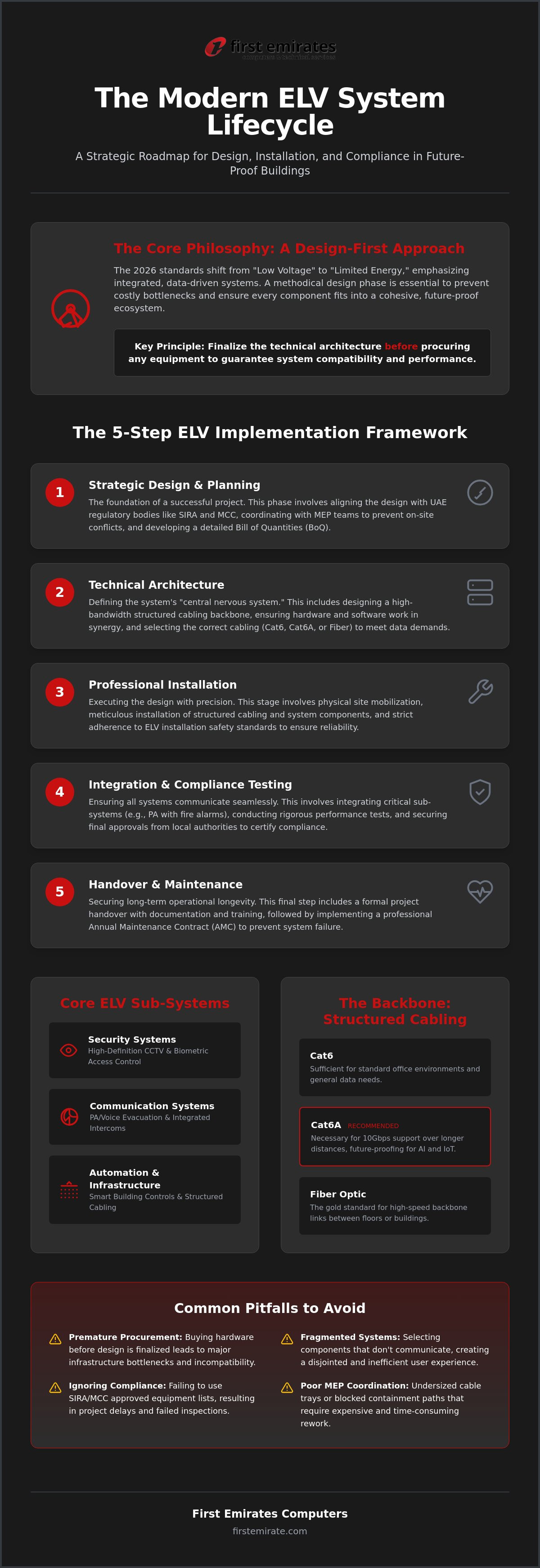
A high-quality ELV system design and installation requires a design-first mindset. Procurement should never happen before the technical architecture is finalized. When equipment is bought prematurely, infrastructure bottlenecks often occur because the physical cabling cannot support the required bandwidth or power requirements. A methodical design phase ensures that every component, from CCTV Surveillance Systems to Biometric Access Control, fits into a cohesive ecosystem. This approach provides a steady foundation for technical readiness and long-term reliability.
The Strategic Importance of Early-Stage ELV Design
Coordination with Mechanical, Electrical, and Plumbing (MEP) teams during the initial phases prevents expensive onsite rework. It's common for projects to face delays when cable trays are undersized or containment paths are blocked by other utilities. The Integrated Design Approach is the standard for UAE commercial projects to ensure all building services work in harmony. Beyond immediate functionality, a scalable design allows for future technology upgrades. This means your infrastructure can support AI-driven surveillance or advanced IoT sensors in the coming years without needing a complete rip-and-replace of your Structured Cabling.
Key Sub-systems in a Unified ELV Architecture
A comprehensive architecture categorizes technology into security, communication, and automation layers. We're seeing a total convergence where IT and security reside on a single network fabric. This requires a hands-on approach to managing bandwidth and power distribution. The sub-systems you choose depend heavily on the building's purpose:
- Commercial and Industrial: These facilities must prioritize mandatory systems such as high-capacity CCTV and Biometric Access Control to meet SIRA or MCC regulatory requirements.
- Residential: Here, the focus often shifts to Home Automation and integrated intercom systems for occupant comfort.
A disciplined design phase identifies these requirements early, ensuring that the final installation provides peace of mind through technical competence. This structured approach to ELV system design and installation ensures that the project remains within budget while meeting all local standards.
Core Components of a Comprehensive ELV Design Framework
A successful ELV system design and installation relies on the seamless interaction between physical hardware and management software. It's a mistake to treat these as separate purchases. For example, selecting high-definition CCTV Surveillance Systems without a corresponding high-bandwidth backbone leads to dropped frames and significant latency. Modern high-definition cameras require robust throughput to function at full capacity, especially when utilizing AI-based analytics. This technical synergy extends to Public Address (PA) and Voice Evacuation systems, which must integrate directly with fire safety layers to ensure automated alerts during emergencies. Adhering to ELV installation safety standards ensures these critical safety links remain functional under stress and comply with civil defense requirements.
Structured Cabling: The Backbone of ELV
The physical layer is where most system failures originate. For UAE enterprises, choosing between Cat6, Cat6A, and Fiber Optic solutions depends on the facility's scale and data requirements. Cat6 is often sufficient for standard office environments, but Cat6A is necessary for 10Gbps support over longer distances and to future-proof the building. Fiber optics remain the gold standard for backbone links between floors or separate buildings to prevent signal degradation. Professional structured cabling services UAE provide the necessary physical layer to support these high-speed demands. Proper server room layouts with organized rack management and dedicated cooling are also vital to prevent hardware overheating and unexpected downtime.
Security and Surveillance Integration
Effective security design moves beyond simply placing cameras. It involves creating a layout that guarantees 100% coverage with zero blind spots, particularly in high-traffic commercial zones. Integrating Biometric Access Control with time and attendance software transforms a simple lock into a powerful management tool. This integration allows for automated reporting and real-time personnel tracking. A methodical ELV system design and installation ensures that these security layers are not just present, but fully integrated into the building's IT fabric. When planning for storage, businesses must decide between cloud-managed and on-premise solutions. While cloud offers scalability, local storage often meets stricter regulatory data residency requirements in certain UAE sectors. If you're planning a new facility, a professional ELV project assessment can help align your technology choices with your operational goals.
Step-by-Step Guide to ELV System Installation and Implementation
The transition from a theoretical Bill of Quantities (BOQ) to physical site mobilization represents the most critical junction in the project lifecycle. Successful ELV system design and installation depends on a disciplined execution plan where procurement, logistics, and onsite technical labor align perfectly. A seasoned Project Manager acts as the central point of contact, overseeing multi-system deployments to ensure that schedules for security, IT, and automation teams don't conflict. This structured oversight prevents the common "silo" effect where different systems are installed without regard for shared containment or network resources.
Rigorous documentation is mandatory throughout this process. We prioritize the creation of "As-Built" drawings, which provide an exact map of the finished installation, including cable routes and termination points. Without this documentation, future troubleshooting or system expansions become nearly impossible, leading to higher costs during the maintenance phase. Using a comprehensive guide to ELV installations ensures that every phase, from the first cable pull to the final software handshake, adheres to international safety and performance benchmarks.
Phase 1: Site Survey and Infrastructure Readiness
Before any hardware arrives, a thorough site audit verifies that all containment and pathways are ready for use. This phase involves checking that conduits are clear and that power supply stability is guaranteed for sensitive electronic components. For outdoor security pole or gate barrier placement, we coordinate closely with civil works teams to ensure foundations and ducting meet technical requirements. This early coordination prevents the need for invasive concrete cutting or rework later in the project.
Phase 2: Cable Pulling, Termination, and Testing
This phase requires a methodical approach to cable management. We implement standardized labeling protocols for thousands of data points to ensure ease of troubleshooting for years to come. Specialized tools, such as fusion splicers for fiber optics and Fluke DSX testers for copper certification, are used to verify link integrity. Professional termination reduces signal attenuation and system latency, ensuring that high-definition video and biometric data transmit without packet loss. Every link is tested and certified before any hardware is mounted.
Phase 3: Hardware Mounting and Software Configuration
Hardware installation involves the strategic placement of IP cameras and biometric readers to maximize coverage and performance. Once mounted, our technicians configure Network Video Recorders (NVR) and Access Control Servers to align with the client's operational policies. The process concludes with User Acceptance Testing (UAT), where we demonstrate system functionality and provide comprehensive staff training. This ensures your team is fully equipped to manage the new infrastructure from day one, providing peace of mind through technical readiness.
Navigating Compliance and System Integration Challenges
Navigating the regulatory landscape in the UAE is often the most significant hurdle for business owners and facility managers. In Abu Dhabi and Dubai, compliance isn't optional; it is a prerequisite for obtaining and renewing operational licenses. An effective ELV system design and installation must account for the strict mandates set by the Security Industry Regulatory Agency (SIRA) and the Monitoring and Control Centre (MCC). These authorities maintain specific approved equipment lists that dictate which hardware models are permitted in commercial and industrial zones. Failing to adhere to these lists during the design phase leads to rejected inspections and expensive hardware replacements.
Technical integration presents its own set of hurdles, particularly when merging legacy analog systems with modern IP infrastructure. Many established facilities still rely on older coaxial-based CCTV or standalone access control units. A methodical approach involves using encoders or hybrid recorders to bring these legacy components into a unified digital environment. This convergence also introduces cybersecurity risks. Because modern ELV systems reside on the corporate network, they must be protected with robust encryption, VLAN segmentation, and regular firmware updates to prevent unauthorized access. This technical readiness is essential for maintaining a secure and reliable IT infrastructure.
Meeting Abu Dhabi SIRA and Regulatory Standards
Specific requirements for SIRA-approved CCTV installations include mandates on camera resolution, storage retention periods, and field-of-view coverage. Working with a SIRA approved CCTV company Abu Dhabi ensures that your project meets these detailed compliance rules from the outset. SIRA plays a vital role in certifying commercial security layouts, providing a layer of oversight that protects both the business owner and the public. We manage the entire submission and approval process, ensuring that the technical specifications align with the latest local standards. Key requirements often include:
- Minimum 1080p resolution for all public-facing cameras.
- 31 days of continuous video storage retention for standard commercial sites.
- Redundant power supplies for critical recording hardware to prevent data loss.
Achieving Seamless Interoperability
System silos occur when hardware from different manufacturers refuses to communicate; this often leads to a fragmented and inefficient user experience. To solve this, we utilize ONVIF (Open Network Video Interface Forum) standards, which ensure that different hardware brands work together within a single ecosystem. This allows for a single-pane-of-glass management dashboard where security, access control, and automation are controlled from one interface. This centralized management reduces the training burden for staff and improves response times during critical events. If you are currently managing fragmented systems, our team can provide a comprehensive integration audit to help streamline your ELV system design and installation strategy.
Ensuring Operational Longevity Through Expert Maintenance
Completing a high-quality ELV system design and installation is a significant milestone, but it's not the final step in the technology lifecycle. Many organizations fall into an "install and forget" mindset, which frequently leads to noticeable system degradation or total failure within 18 months. In the UAE's specific climate, hardware faces constant challenges from heat stress and dust accumulation, while software components require regular tuning to maintain peak performance. A methodical approach to post-installation care ensures that your investment continues to provide security and efficiency long after the initial handover.
The technical landscape is shifting toward remote monitoring and predictive maintenance. By 2026, industry data suggests that 70% of ELV systems will incorporate IoT technology for real-time health checks. This allows technical teams to identify a failing hard drive in a Network Video Recorder or a struggling power supply before the system actually goes offline. Moving from reactive repairs to a proactive management model is the only way to guarantee the 99.9% uptime required for critical security and IT infrastructure.
The Role of Annual Maintenance Contracts (AMC)
A professional Annual Maintenance Contract (AMC) is the most effective tool for reducing the Total Cost of Ownership (TCO). Preventative maintenance is always more cost-effective than reactive emergency repairs, which often involve expedited shipping fees for parts and unplanned operational downtime. Beyond hardware cleaning and calibration, an AMC includes essential firmware updates. These updates are vital for protecting IP-based systems against emerging cybersecurity threats that target networked devices. Furthermore, a well-structured Service Level Agreement (SLA) provides peace of mind by guaranteeing specific response times for critical failures, ensuring that your facility is never left vulnerable.
Why First Emirates Computers is Your Strategic ELV Partner
Choosing a partner with deep local expertise is essential for navigating the complexities of the Abu Dhabi market. With over 15 years of experience, First Emirates Computers understands the specific technical and regulatory requirements of the region. We provide a single point of contact for your IT, security, and ELV needs, eliminating the frustration of managing multiple vendors who may point fingers at one another when issues arise. Our team takes a hands-on, methodical approach to every project, ensuring that your infrastructure is built on a foundation of reliability and technical proficiency. If you're ready to secure your facility's future, consult with our ELV experts for your next project to develop a solution that meets your specific operational goals.
Securing Your Infrastructure's Future through Technical Excellence
Building a resilient technical infrastructure requires a disciplined approach that balances immediate operational needs with long-term scalability. The foundation of a reliable facility lies in a design-first strategy that anticipates regulatory hurdles and infrastructure bottlenecks before they arise. By prioritizing high-bandwidth backbones and seamless system integration, you ensure that your security and IT networks remain functional and compliant with local standards.
Success in ELV system design and installation is not just about the initial deployment; it is about sustaining performance through professional oversight. Partnering with a SIRA Approved Security Specialist who brings over 15 years of UAE infrastructure experience ensures that your project adheres to the highest safety and technical benchmarks. From initial site surveys to comprehensive IT and security AMC services, a methodical partner provides the stability needed in a complex technical landscape.
Take the first step toward a unified, future-proof facility today. Request a Professional ELV System Design Consultation to discuss your specific project requirements. We look forward to helping you achieve technical readiness and long-term peace of mind.
Frequently Asked Questions
What is the difference between ELV and LV systems?
Low Voltage (LV) systems typically operate between 50V and 1000V AC and are used for primary power distribution within a building. Extra Low Voltage (ELV) systems operate at 50V AC or 120V ripple-free DC and below. While LV handles power, ELV focuses on data, security, and communication. A precise ELV system design and installation ensures these sensitive data networks remain separate from high-voltage interference.
How long does a typical ELV system installation take in Abu Dhabi?
Project timelines vary based on the building size and complexity, but a standard commercial fit-out typically requires four to eight weeks for completion. This period covers the entire lifecycle, including site mobilization, structured cabling, hardware mounting, and final commissioning. Large-scale industrial projects or multi-story buildings may require several months of coordinated effort to ensure all systems meet local technical standards.
Are SIRA approvals mandatory for all commercial buildings in Abu Dhabi?
SIRA regulations specifically apply to the Emirate of Dubai, while commercial buildings in Abu Dhabi must adhere to the standards set by the Monitoring and Control Centre (MCC). Both authorities require businesses to use approved equipment and certified installers for security systems. It is essential to verify which local authority governs your specific location to ensure your ELV system design and installation meets all legal mandates.
Can I integrate my existing analog CCTV into a new ELV design?
Integration is possible through the use of hybrid Network Video Recorders (NVRs) or video encoders that convert analog signals into digital data. This approach allows you to retain your existing hardware investment while upgrading to a modern, IP-based management platform. We recommend a technical audit to ensure your legacy cameras are compatible with the bandwidth and storage requirements of the new centralized infrastructure.
What are the benefits of Cat6A over Cat6 for ELV cabling?
Cat6A supports data transmission speeds of up to 10Gbps at a full distance of 100 meters, whereas standard Cat6 is typically limited to 1Gbps at that range. Cat6A also features improved shielding that significantly reduces crosstalk and electromagnetic interference. This makes it the superior choice for high-definition surveillance and future-proofing your building against the increasing data demands of AI-driven security tools.
How often should an ELV system undergo professional maintenance?
Professional maintenance should be performed at least once every quarter to ensure hardware reliability and software stability. These scheduled visits include cleaning camera lenses, checking cable terminations, and testing backup power supplies. Regular inspections help identify minor technical issues before they escalate into system-wide failures. This proactive approach is vital for maintaining the technical readiness of your security and IT infrastructure.
What is an AMC and why is it necessary for security systems?
An Annual Maintenance Contract (AMC) is a formal service agreement that provides regular preventative maintenance and guaranteed emergency support. It is necessary for security systems because it ensures continuous compliance with UAE regulatory standards and reduces the total cost of ownership. Having an AMC in place provides peace of mind, knowing that seasoned technicians are managing your system's health and cybersecurity updates.
Can ELV systems be integrated with Home Automation or BMS?
Modern ELV systems are designed for high levels of interoperability with Building Management Systems (BMS) and Home Automation platforms. This integration allows for centralized control of security, lighting, HVAC, and access control through a single interface. By linking these systems, facility managers can optimize energy consumption and improve response times during emergencies. This creates a truly intelligent and efficient building environment.


