

A store with cameras across the sales floor can still have security gaps. The entrance, checkout points, stockroom and staff-only areas each serve a different purpose. A security system for retail store Abu Dhabi businesses should therefore be planned around the layout and daily operations, not a generic camera count.
Starting with CCTV makes sense, but cameras alone may not address access to restricted areas or the practical needs of installation and ongoing upkeep. This guide explains how to identify useful security components for your store, consider CCTV coverage alongside access control, and plan cabling and maintenance as part of the same project.
You’ll also learn how indoor and outdoor cameras, biometric access devices and structured cabling can support different retail requirements. First Emirates Computers and Technical Services L.L.C., based in Musaffah 9, Abu Dhabi, has served customers since 2011. Its CCTV, access control, cabling and customized annual maintenance services provide a foundation for planning security around your retail operation.
Key Takeaways
- Plan a security system for retail store Abu Dhabi around the store’s layout, operating hours and access patterns rather than a standard camera count.
- Use CCTV to monitor selected areas and access control to manage entry to staff-only or restricted spaces.
- Map store zones and define security objectives before selecting components, then include cabling and infrastructure in the plan.
- Consider fixed or moving cameras suited to indoor or outdoor use, including IP, Wi-Fi and solar camera categories.
- Plan installation and ongoing maintenance together. First Emirates has served customers since 2011.
Why a Retail Store Security System in Abu Dhabi Needs More Than Cameras
A store’s security priorities depend on its floor plan, operating hours and the way people move through the premises. A compact shop with one entrance and a stockroom has different planning needs from a larger store with several checkout points, delivery access and multiple staff-only areas. For a security system for retail store Abu Dhabi businesses, start by identifying what each area needs to achieve, rather than choosing equipment by camera count.
CCTV provides visual monitoring by recording activity in selected areas for review. Access control serves a different purpose: it manages entry to restricted spaces. These functions can complement one another, but neither replaces the other. A camera may show activity around a stockroom entrance, while an access-control device helps manage who can enter.
Which retail areas should shape the security plan?
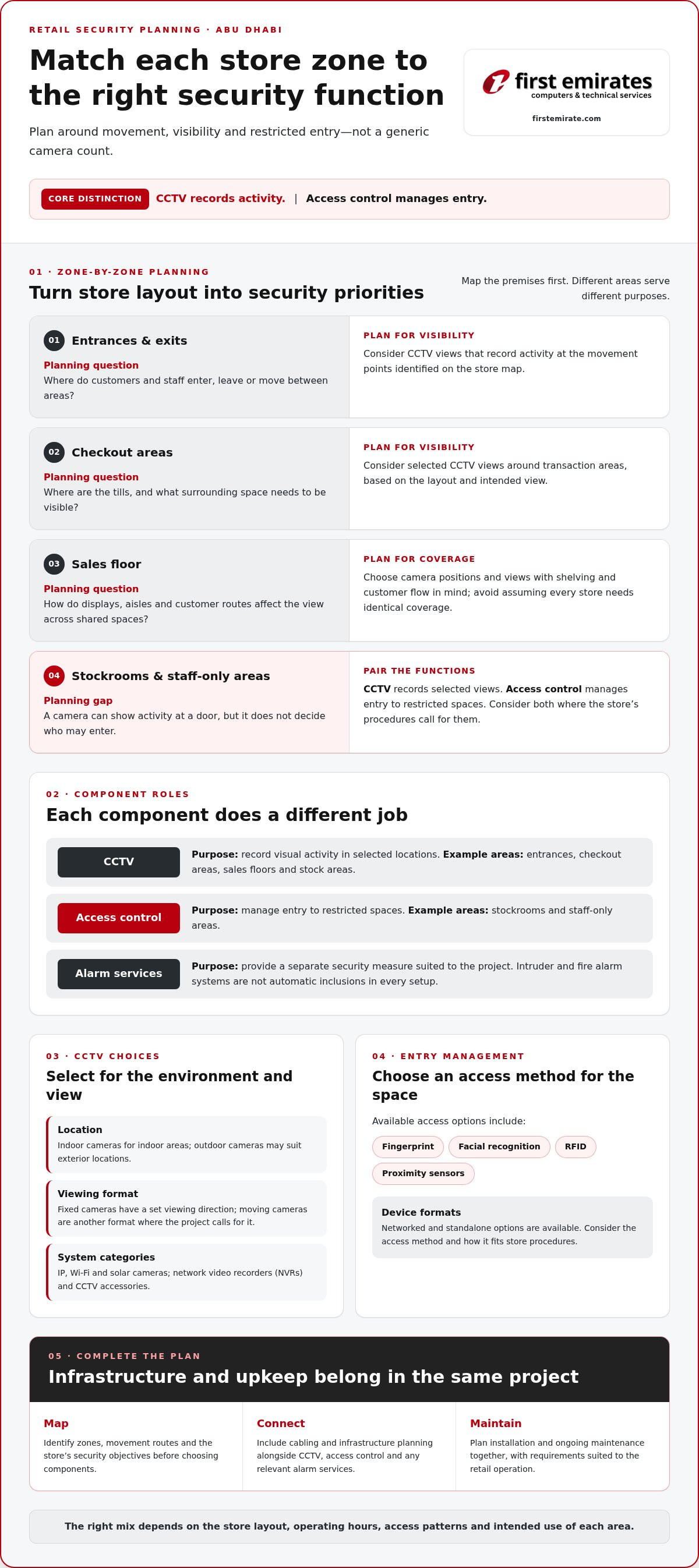
Consider each store zone separately. Entrances and exits are movement points for customers and staff. Checkout areas involve transactions, while the sales floor needs visibility that accounts for shelving and customer flow. Stockrooms and other back-of-house spaces have different access patterns and may need controlled entry as well as monitoring.
Customer-facing areas generally call for visibility across shared spaces and movement routes. Staff-only areas require a clearer focus on who can enter and how access is managed. A practical planning review can map:
- Entrances: where people enter, leave or move between areas.
- Checkout areas: till locations and the surrounding space that needs to be visible.
- Sales floors: the arrangement of displays, aisles and customer routes.
- Stockrooms: restricted areas, staff access and the movement of goods.
This map helps identify priorities without assuming that every store needs the same equipment or coverage. The design should reflect the site and its operation.
Why a camera-only approach may leave planning gaps
Cameras record selected views, but they do not determine who is allowed into a staff-only room. Access control, including biometric options such as fingerprint or facial recognition, addresses entry management as a separate function. Intruder and fire alarm systems can also form part of a project’s security plan. Each component has a distinct role, so selection should follow the store’s layout and operational requirements.
Security planning also involves more than visible theft. Retail loss prevention can include measures addressing stock handling, staff procedures and transaction processes, as outlined in this overview of retail loss prevention strategies. For example, a retailer may want clear views around a checkout while restricting access to stock storage. The appropriate arrangement depends on how the store operates, not on a generic template.
In Abu Dhabi, a considered plan connects security functions to the movement of customers, employees and goods. Separating monitoring from entry management makes it easier to identify gaps, prioritize relevant components and plan infrastructure around the premises. The next step is to compare the available components and the areas they can support.
CCTV, Access Control and Alarms: Retail Security System Components
A practical security system for retail store Abu Dhabi premises can combine several components, each serving a different purpose. CCTV records activity in selected views, access control manages entry to designated spaces, and alarm systems provide a separate security function. The right mix depends on the store’s layout and operating requirements, rather than a standard package.
| Component | Primary purpose | Example store areas |
|---|---|---|
| CCTV | Record visual activity in selected locations | Entrances, checkout areas, sales floors and stock areas |
| Access control | Manage entry to restricted spaces | Stockrooms and staff-only areas |
| Alarm services | Provide an additional security measure suited to the project | Areas identified in the store’s security plan |
CCTV options for different retail environments
Camera selection starts with the environment and the view required. Indoor cameras can be considered for sales floors, checkout areas or stockrooms, while outdoor cameras may suit exterior locations. Fixed cameras provide a set viewing direction; moving cameras offer another format for areas where the project calls for it. The suitability of each option depends on the site and intended use.
Available categories include IP, Wi-Fi and solar cameras. Network video recorders (NVRs) and CCTV accessories are also part of the system range. These components support a CCTV installation, but their specific arrangement should be planned around the premises and selected equipment. Do not assume that every camera type has the same functions or that a particular recording specification applies to every project.
Access control and alarms for staff-only areas
Biometric access options include fingerprint and facial-recognition devices, as well as RFID and proximity sensors. Devices are available in networked and standalone options. For a stockroom or staff-only door, focus planning on the access method and how it fits the store’s procedures.
Intruder and fire alarm systems are separate security services that may be relevant to a project. They are not automatic inclusions in every CCTV or access-control setup. Consider their role and placement in relation to the store’s requirements, alongside cameras and controlled access, rather than assuming they come with other equipment.
Review each component by asking what it does, which area it supports and how it fits the overall plan. A checkout may call for visual monitoring, while a restricted stock area may call for access management. An alarm service can be considered separately where relevant. This keeps the design specific to the store instead of adding features without a clear operational purpose.
First Emirates provides CCTV and biometric access control solutions for retail security projects. To explore how the components can be planned for your premises, view retail security solutions.
Matching Abu Dhabi Retail Security Systems to Your Store
A clear plan turns security priorities into practical equipment and infrastructure decisions. For a security system for retail store Abu Dhabi businesses, start with how the premises operate: customer routes, staff-only spaces, opening and closing routines, and the movement of stock. This keeps component selection tied to actual requirements rather than assumptions about what every retail site needs.
Start with store layout and operating requirements
Mark customer areas, staff-only spaces and key entry points on a simple floor plan. Then assign an objective to each zone. An entrance may need visual monitoring, while a stockroom door may call for managed access. A checkout area may need a clear view of activity. These objectives guide choices without assuming that a particular camera will prevent or detect every incident.
Use this sequence to organize the decisions:
- Map zones: Note entrances, sales areas, checkout points, stockrooms and other restricted spaces.
- Define objectives: State what monitoring or access management should support in each zone.
- Select categories: Consider CCTV, biometric access control and related security services according to those objectives.
- Plan infrastructure: Account for cabling, networking and equipment locations alongside the system components.
- Arrange support: Include installation and ongoing maintenance in the project plan.
This process separates established service capabilities from site-specific design choices. CCTV installation and maintenance, access control, and cabling and networking are services First Emirates provides. Camera locations, access points, cable routes and equipment arrangement should be determined for the individual premises. The access control system selection guide can help clarify factors involved in choosing access-control devices for the store.
Plan the security equipment and cabling together
Infrastructure planning belongs alongside equipment selection because camera and access-control locations affect cable routes and network requirements. Consider where the equipment will be placed, how routes can connect relevant areas, and whether the building layout presents practical constraints. Planning these details early helps coordinate installation work and avoid treating cabling as an afterthought.
Available infrastructure categories include CAT 5 and CAT 6 cabling, fiber and networking products. The appropriate materials and layout depend on the project. Store size, existing infrastructure, equipment positions and building configuration all influence the design, so no single cable type or route should be assumed to suit every site. Addressing these details as part of the plan gives the installation team a clearer basis for coordinating security equipment and structured cabling.
Keep the design proportionate to the store’s needs and budget. A considered plan links each selected component to a defined purpose, while keeping coverage, performance and installation details specific to the premises. This creates a practical foundation for coordinated installation and support.
Retail Security Installation and Maintenance in Abu Dhabi
A successful security project connects the store’s requirements, equipment choices and infrastructure in a clear sequence. Planning installation and ongoing care together helps retailers consider how the system will fit the premises and how it will be supported over time. For a security system for retail store Abu Dhabi businesses, each project should reflect the store’s layout and operating needs.
What to plan before security system installation
Before installation, bring the decisions from the planning stage into one project outline. Identify the customer-facing zones that need CCTV, the staff-only areas where access control may be appropriate, and the key entry points. Include relevant infrastructure requirements, such as structured cabling and networking, so equipment placement and cable routes are considered together.
A practical project sequence is:
- Set requirements: Record the store’s monitoring and access-management objectives.
- Plan infrastructure: Consider cabling, networking and where system equipment will be located.
- Coordinate installation: Arrange installation of the selected CCTV and access-control components around the premises.
- Plan ongoing care: Include maintenance needs in the project discussion from the outset.
This sequence gives the project a working structure without assuming a standard timeline or installation scope. Each store’s requirements and building conditions shape the detailed design and implementation.
First Emirates provides installation and maintenance of CCTV and access-control systems. Its related cabling and networking services can also be included in the infrastructure plan. Keeping these project elements in view helps retailers coordinate equipment decisions with the physical setup, rather than treating cabling as a separate afterthought.
How maintenance supports long-term system care
Installation is one part of the system lifecycle. Maintenance is another consideration, particularly for retailers planning ongoing care after the equipment is in place. First Emirates offers CCTV and access-control maintenance, along with customized, integrated annual maintenance contracts. Contract arrangements are tailored to customer requirements, so the scope should reflect the systems and support needs involved in each project.
Consider maintenance while defining the project, not only after installation. This gives the business an opportunity to identify which systems need ongoing attention and how support fits its operational priorities. The IT AMC services guide provides further context on maintenance planning for business continuity.
First Emirates Computers and Technical Services L.L.C. has served customers since 2011 and is based in Musaffah 9, Abu Dhabi. For a coordinated approach to CCTV and access-control installation and maintenance, discuss your retail security system requirements.
Plan Your Retail Security System with First Emirates Computers
Planning a retail security project is easier when the provider can address equipment and related infrastructure as connected parts of the work. is based in Musaffah 9, Abu Dhabi, and has served customers since 2011. Its CCTV, biometric access control and related security services support retailers planning a security system for retail store Abu Dhabi premises around their own operations.
A locally based partner for retail security projects
First Emirates provides CCTV installation and maintenance, access control and security solutions. CCTV options include fixed and moving cameras, indoor and outdoor categories, IP and Wi-Fi cameras, and solar cameras. Biometric access options include fingerprint and facial-recognition devices, RFID and proximity sensors, and networked and standalone devices. Retailers can consider these components for monitoring and managing access, with the final arrangement shaped by the site.
Cabling and networking are related infrastructure services that can be considered alongside security equipment. Planning these together connects system choices with the practical needs of the premises, such as equipment locations and cable routes. First Emirates aims to provide solutions within the customer’s budget and prioritizes customer satisfaction, while keeping project design specific to the store’s requirements.
Prepare a clear brief for your retail security project
A useful project brief does not need to begin with a predetermined equipment list. Start with the store and the tasks the security system needs to support. Share the layout, operating needs and areas where visual monitoring or controlled access may be relevant. For example, note customer-facing areas separately from staff-only spaces, and identify entrances, checkout areas and stockrooms on the plan.
These details help frame the project around your priorities and budget. Include existing cabling or networking information if available, and describe operational requirements that could affect equipment placement or installation planning. Clear inputs help shape a project-specific solution without assuming that every retail premises needs the same camera types, access devices or infrastructure.
Before discussing the project, consider preparing:
- A store layout with customer-facing and staff-only areas identified.
- The locations where CCTV monitoring or controlled access is being considered.
- Relevant operating requirements and infrastructure details.
- Your priorities for the project and the budget it needs to meet.
This information gives First Emirates a practical starting point for discussing CCTV, biometric access control, security services and related cabling or networking. The goal is to align the components with the store’s actual layout and operational needs, rather than selecting equipment without a defined purpose.
To discuss your retail security requirements with First Emirates, contact the team through the company website.
Turn Your Store Plan into a Practical Next Step
Use the decisions in this guide to create a short project brief before selecting equipment. Mark the areas that matter most, note where access should be restricted, and describe how the store operates during opening, closing and stock handling. This gives the discussion a clear starting point and helps distinguish immediate priorities from options that can be planned for later.
A well-considered security system for retail store Abu Dhabi businesses should remain aligned with how each store operates and changes. A revised floor plan, new checkout arrangement or added back-of-house space may affect camera placement, access arrangements or cabling requirements. Treat security as part of the store’s operational planning, and revisit requirements when the premises or workflows change.
You do not need to specify every component upfront. A clear brief can identify the needs to address while leaving equipment choices and project details to be shaped around the premises and its priorities. First Emirates can help frame that discussion around your retail security requirements and ongoing maintenance planning.
Discuss your retail security system requirements with First Emirates. A clear brief and methodical plan make it easier to shape practical next steps around your store.
Frequently Asked Questions
What types of CCTV cameras does First Emirates offer?
First Emirates offers fixed and moving cameras, indoor and outdoor cameras, IP and Wi-Fi cameras, and solar cameras. Its CCTV categories also include network video recorders and accessories. For a retail project, describe the intended setting, such as an interior sales area or exterior location, and the views the system needs to support. This helps frame equipment choices around the store rather than a particular model name.
Does First Emirates provide biometric access control for retail businesses?
Yes. First Emirates provides biometric access control, including fingerprint and facial-recognition devices, RFID and proximity sensors, and networked and standalone device options. For a security system for retail store Abu Dhabi businesses, start by identifying which doors or staff-only spaces need managed access. This gives the project discussion a practical focus, while the device arrangement is shaped around the store’s requirements.
Does First Emirates install and maintain CCTV systems?
Yes. First Emirates provides CCTV installation and maintenance. Retailers can prepare by noting the areas they want to monitor, the camera categories they are considering and relevant cabling or networking details. This information helps establish project requirements before installation planning. The equipment arrangement and installation details depend on the premises and selected system, rather than following one standard layout for every store.
Does First Emirates offer annual maintenance contracts for security systems?
Yes. First Emirates offers customized, integrated annual maintenance contracts. Retailers can consider ongoing maintenance while planning their security project and identify the systems they want the arrangement to address. Contract details are tailored to customer requirements, so the scope should reflect the project rather than assume a standard arrangement. This makes maintenance planning part of the project discussion, alongside equipment and infrastructure decisions.
Where is First Emirates Computers located in Abu Dhabi?
is located in Musaffah 9, Abu Dhabi, United Arab Emirates. The company’s listed PO Box is 38575. Retailers preparing a project brief can include their store location and operational details to keep discussions focused on the relevant premises. This local address identifies the company’s Abu Dhabi base for its security and related technical services.
When was First Emirates Computers established?
was established in 2011 and has served customers since then. For a retail security project, equipment and service requirements depend on the individual store. Retailers can outline their priorities and premises details to shape a project discussion around their needs.


